
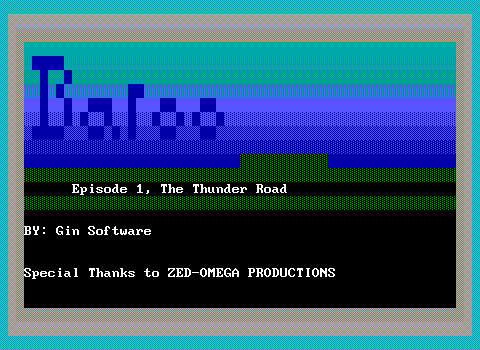
Vampire Immortal
There are games that entertain, games that challenge, games that inspire, and then there is this one: a profound interactive meditation on the fragile contract between expectation and reality. To call it “bad” would be reductive, in the same way that calling a burning library “warm” fails to appreciate the full architectural commitment of the moment.
From the very first frame, the game announces itself with the confidence of a project that has never been troubled by excessive polish. The visuals possess a rare, almost archaeological quality, as though each texture was recovered from a forgotten hard drive beneath several layers of dust, regret, and expired software licenses. Characters move with the haunting grace of shopping carts on uneven pavement, and the environments seem less “designed” than politely assembled during a power outage.
The gameplay is where the experience truly transcends conventional categories. Every mechanic feels like a philosophical question. Why does the jump button sometimes jump? Why does the inventory open only after a brief emotional negotiation? Why does the camera behave like a suspicious housecat trapped in a washing machine? These are not flaws. They are invitations. The game does not hold your hand; it loosely gestures toward your hand from across a parking lot and then walks into traffic.
Combat, in particular, is a triumph of uncertainty. Enemies attack with the precision of weather systems, while the player responds through a control scheme that feels translated from an extinct language by a committee of raccoons. Victory never feels cheap because it rarely feels intentional. Each successful encounter is less a matter of skill and more a small administrative miracle.
The story, meanwhile, unfolds with the narrative clarity of a dream recounted by someone who woke up halfway through telling it. Characters appear, speak in sentences that resemble dialogue from a distance, and vanish before the burden of motivation can become too heavy. The protagonist’s journey is moving, though mostly because the pathfinding keeps moving them into walls.
Sound design deserves special recognition. The soundtrack bravely explores the space between music and nearby plumbing. Some tracks loop with such dedication that they begin to feel less like background music and more like a legal obligation. The voice acting, where present, reaches emotional depths previously thought accessible only to GPS systems and automated customer support lines.
And yet, despite everything, the game possesses a strange magnetism. Perhaps it is the raw ambition. Perhaps it is the accidental comedy. Perhaps it is the fact that every loading screen provides a valuable opportunity for personal reflection, light exercise, or the reconsideration of one’s life choices. Whatever the reason, I found myself continuing, not because I was enjoying it in the traditional sense, but because I had begun to suspect the game knew something I did not.
In the end, this is not merely a bad game. It is an event. A digital pothole. A shimmering monument to what happens when vision, budget, deadlines, and basic collision detection all agree to pursue separate careers. It may not be fun, coherent, responsive, balanced, attractive, or technically stable, but it has something far rarer: the audacity to exist exactly as it is.
Five stars, because any lower rating would imply I understood it.
What the fuck is this? I pressed play and the title screen didn't even go away. Did you even test this? Why the fuck is this released?
- Refusing Zim's job offer, then reconsidering will cause a different :touch label to be loaded than expected, breaking a key story progression point.
- There's a passage location error when trying to enter the other side of the Great Wall if you enter the relevant board early.
- Draining health won't actually kill you. This may or may not be a bug, depending on interpretation.